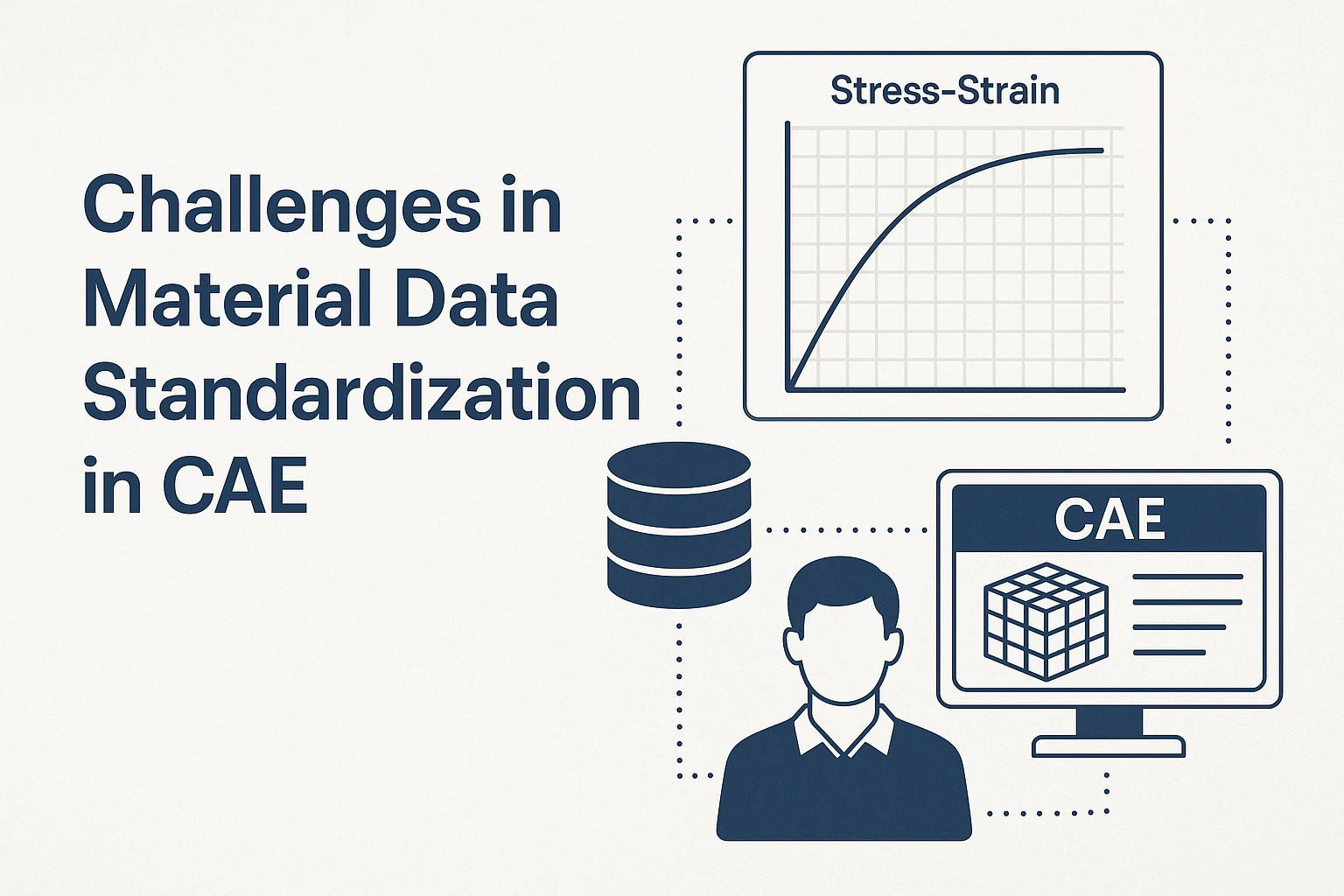
In the world of Computer-Aided Engineering (CAE), material data is a critical factor that directly affects the accuracy of simulations. However, ensuring consistent, complete, and reliable material data across various simulation tools remains a major challenge for engineers and organizations alike. This article explores the key challenges in material data standardization for CAE, and how TASVINA supports engineering teams in overcoming them to enhance their digital simulation workflows. Diversity and Nonlinearity of Materials Modern CAE simulations deal with a wide range of materials—metals, polymers, composites, elastomers, and smart materials—each exhibiting unique mechanical and thermal behaviors. Accurate modeling requires not only...
In the era of Industry 4.0, Computer-Aided Engineering (CAE) and automation technologies are transforming the way products are designed and optimized. Automated CAE workflows can handle repetitive simulation tasks, reduce lead time, and increase efficiency. But one question often arises: If automation takes over, do engineers still have a role to play? At TASVINA, a company specializing in engineering solutions for automotive, industrial automation, and high-tech product development, we believe the answer is clear: engineers are not being replaced — they are being empowered. 1. What Is CAE Automation — and What Does It Do? CAE automation integrates scripts, APIs,...