Introduction: Automation Is No Longer Optional
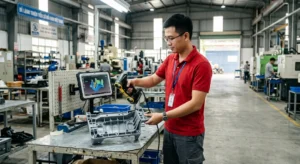
Vietnam’s automotive and motorcycle supporting industries are standing at a critical crossroads. For decades, many local suppliers have relied on cost competitiveness, manual labor, and incremental process improvements to remain viable. However, the global manufacturing landscape is changing rapidly. Automation, digitalization, and smart manufacturing are no longer advantages—they are baseline requirements.
In an era defined by Industry 4.0, the question facing Vietnamese supporting enterprises is no longer “Should we automate?” but rather “How fast can we automate before we fall behind?”
For Tier 1 and Tier 2 suppliers serving automotive and motorcycle OEMs, automation has become a decisive factor for survival, scalability, and long-term competitiveness. This article analyzes why automation is now a life-or-death challenge, what risks Vietnamese enterprises face if they delay transformation, and how a structured engineering-driven approach—such as that provided by TAS Vietnam—can help companies transition effectively.
1. The Current State of Vietnam’s Supporting Industries
Vietnam has made remarkable progress in manufacturing over the past two decades. The country is now a key production hub for motorcycles, passenger vehicles, and automotive components serving both domestic and export markets.
However, a closer look reveals structural weaknesses within the supporting industries:
-
Heavy dependence on labor-intensive processes
-
Limited adoption of automation and robotics
-
Inconsistent quality stability across production batches
-
Long tooling lead times
-
Low level of digital integration between design, production, and quality control
While these weaknesses may have been manageable in the past, they are increasingly incompatible with the demands of modern automotive supply chains.
2. Rising Pressure from Global OEMs and Tier-1 Suppliers
Global automotive OEMs operating in Vietnam—along with multinational Tier-1 suppliers—are rapidly aligning local production with global standards. These standards include:
-
High automation ratios
-
Zero-defect quality targets
-
Full traceability
-
Shortened product life cycles
-
Rapid model changeovers
Suppliers unable to meet these requirements face exclusion from new projects, even if their pricing is competitive.
Automation is no longer just about reducing labor costs. It is about:
-
Ensuring repeatability and precision
-
Minimizing human error
-
Enabling scalable production
-
Meeting global audit requirements
In this context, automation becomes a gatekeeper to participation in high-value automotive supply chains.
3. The Real Cost of Not Automating
Many Vietnamese enterprises hesitate to invest in automation due to perceived high upfront costs. However, the hidden cost of not automating is often far greater.
3.1 Quality Risks
Manual processes lead to variability. In automotive manufacturing, even small deviations can result in:
-
Costly recalls
-
Line stoppages
-
Loss of customer trust
Without automation, achieving stable Cp/Cpk values and meeting stringent quality KPIs becomes increasingly difficult.
3.2 Productivity Bottlenecks
Labor-intensive production limits output scalability. As demand increases, companies are forced to:
-
Add more workers
-
Increase overtime
-
Accept diminishing returns on productivity
Automation, by contrast, enables linear or even exponential output growth with controlled cost structures.
3.3 Talent Shortages
Vietnam, like many manufacturing economies, is facing a growing shortage of skilled shop-floor workers. Younger generations are less inclined toward repetitive manual labor.
Automation reduces dependence on scarce labor while shifting demand toward higher-value technical roles.
4. Automation Is Not Just Robots: A System-Level Perspective
One common misconception is equating automation solely with industrial robots. In reality, effective automation is a system-level transformation, including:
-
Automated tooling and jigs
-
Precision mold and die design
-
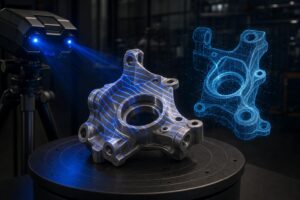
Process simulation (CAE)
-
Digital production planning
-
Inline quality inspection
-
Data-driven process optimization
This is where many automation projects fail—not because of technology, but due to insufficient engineering integration.
5. The Critical Role of Engineering in Automation Success
Automation without strong engineering foundations often leads to:
-
Poor equipment utilization
-
Inflexible production lines
-
High maintenance costs
-
Inability to adapt to new models
Successful automation requires deep expertise in:
-
CAD/CAM/CAE
-
Manufacturability analysis
-
Tooling and jig design
-
Process simulation
-
Design-for-Automation (DFA)
This is precisely where engineering outsourcing partners like TAS Vietnam play a strategic role.
6. How TAS Vietnam Supports Automation-Driven Transformation
TAS Vietnam is an engineering outsourcing company specializing in Injection Mold Design, Stamping Die Design, Jig & Fixture Engineering, and Manufacturing Simulation for automotive and industrial applications.
Rather than offering generic automation solutions, TAS Vietnam focuses on engineering-first automation enablement, helping manufacturers build a solid technical foundation before investing in equipment.
Core Capabilities Include:
-
Injection Mold & Stamping Die Design
-
Optimized for automated production
-
Reduced cycle time and defect rates
-
-
Jig & Fixture Design
-
Ensuring repeatability and positioning accuracy
-
Designed for robotic handling and automated assembly
-
-
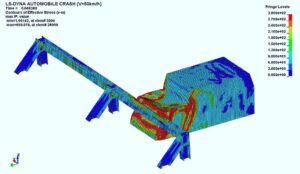
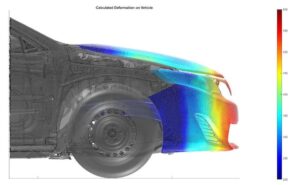
CAD/CAE Simulation
-
Mold flow analysis
-
Forming simulation
-
Process validation before physical investment
-
-
Manufacturability Optimization
-
Design adjustments to reduce complexity
-
Lower tooling and automation costs
-
By integrating engineering and automation planning early, TAS Vietnam helps clients avoid costly redesigns and delays.
7. Automation as a Strategic Investment, Not a Cost
Enterprises that successfully automate view automation not as an expense, but as a strategic investment that delivers:
-
Long-term cost reduction
-
Stable quality performance
-
Faster time-to-market
-
Enhanced competitiveness in global supply chains
Automation also enables Vietnamese suppliers to move up the value chain—from simple part manufacturing to integrated module production and co-development with OEMs.
8. The Future: Digital Manufacturing and Smart Factories
Looking ahead, automation is only the first step. The future belongs to digital manufacturing, where:
-
Production data is collected in real time
-
Processes are continuously optimized
-
Engineering and production are fully integrated
-
Decisions are data-driven rather than experience-based
Companies that delay automation today risk being locked out of this future ecosystem.
Conclusion: Automate or Be Left Behind
For Vietnam’s automotive and motorcycle supporting industries, automation is no longer a strategic option—it is a survival requirement.
Enterprises that act decisively will gain access to higher-value projects, global customers, and sustainable growth. Those that hesitate risk stagnation and eventual displacement.
With strong engineering foundations, the right partners, and a clear automation roadmap, Vietnamese manufacturers can not only survive—but thrive—in the next era of global manufacturing.
TAS Vietnam stands ready to support this transformation—bridging the gap between engineering excellence and automation-driven manufacturing performance.