For decades, Vietnam has positioned itself as a competitive manufacturing hub based largely on cost-effective labor. This strategy has attracted global OEMs and Tier suppliers across automotive, electronics, home appliances, and industrial equipment. However, the very advantage that fueled rapid industrial growth is now becoming a structural limitation. Rising wages, labor shortages, inconsistent skill levels, and increasing global quality standards are eroding the sustainability of a low-cost labor model.
Industrial robots are no longer a luxury reserved for high-income economies. They are becoming a strategic necessity for Vietnamese enterprises that seek to move up the value chain, enhance productivity, and build long-term competitiveness. This article provides an in-depth technical and strategic analysis of how industrial robotics enables Vietnamese manufacturers to transition from labor-intensive operations to high-performance, automation-driven production systems.
1. Understanding the “Low-Cost Labor Trap” in Manufacturing
The low-cost labor trap occurs when a country or company remains dependent on inexpensive manual labor as its primary competitive advantage. While this model initially supports rapid industrial expansion, it presents several structural risks:
-
Limited productivity growth
-
Low profit margins
-
High sensitivity to wage inflation
-
Vulnerability to relocation by global buyers
-
Difficulty meeting international quality standards
As Vietnam integrates deeper into global supply chains and free trade agreements, manufacturers are under pressure to deliver:
-
Higher precision
-
Faster lead times
-
Greater consistency
-
Strict traceability and compliance
Relying primarily on manual labor restricts scalability and exposes operations to human variability. Industrial robotics addresses these structural constraints.
2. What Are Industrial Robots in Modern Manufacturing?
Industrial robots are programmable, multi-axis mechanical systems capable of performing tasks such as welding, assembly, material handling, inspection, machining support, and packaging with high precision and repeatability.
According to the standards defined by the International Organization for Standardization (ISO 8373), an industrial robot is an automatically controlled, reprogrammable, multipurpose manipulator programmable in three or more axes.
Today’s industrial robots are integrated with:
-
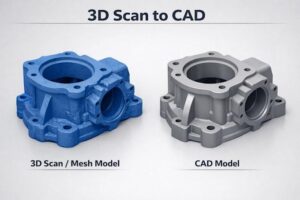
CAD/CAM systems
-
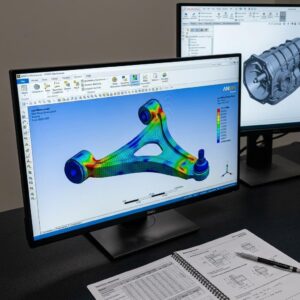
CAE simulation platforms
-
Machine vision systems
-
IoT-enabled monitoring
-
AI-driven optimization algorithms
This integration transforms robots from simple automation tools into intelligent production assets.
3. Productivity: From Linear Growth to Exponential Performance
3.1 Cycle Time Reduction
Manual operations are constrained by fatigue, shift schedules, and human variability. Robots operate continuously with stable cycle times. In stamping, injection molding support, CNC loading/unloading, and spot welding, robots can reduce cycle time by 15–40%, depending on process optimization.
3.2 OEE Improvement
Overall Equipment Effectiveness (OEE) improves significantly when robotics is implemented:
-
Reduced downtime
-
Fewer micro-stoppages
-
Consistent takt time
-
Lower defect rate
A robotic cell integrated with simulation-based process validation ensures predictable throughput and minimized production disruptions.
3.3 Scalable Production Capacity
Unlike manual labor scaling, which requires recruitment, training, and supervision, robotic scaling is modular. Additional cells can be deployed based on demand forecasting, enabling flexible capacity expansion.
4. Quality Stability and Precision Engineering
Global OEMs demand micron-level precision and zero-defect manufacturing. Human-based operations struggle to maintain consistent tolerances over long production runs.
Industrial robots offer:
-
Repeatability within ±0.02–0.05 mm (depending on model)
-
Consistent force control in assembly
-
Stable welding penetration depth
-
Uniform adhesive dispensing
In sectors such as automotive tooling and electronics assembly, robotics ensures compliance with international quality frameworks such as IATF 16949 and ISO 9001.
Simulation-driven design using CAE tools allows manufacturers to validate robotic paths, collision avoidance, stress distribution, and thermal behavior before physical implementation. This significantly reduces commissioning risk.
5. Labor Cost vs. Total Cost of Ownership (TCO)
A common misconception among Vietnamese SMEs is that industrial robots are expensive investments. However, strategic evaluation must consider Total Cost of Ownership (TCO), including:
-
Labor cost inflation
-
Recruitment and training expenses
-
Quality rework and scrap
-
Production downtime
-
Occupational safety risks
When analyzed over a 3–5 year lifecycle, robotic systems often deliver:
-
Payback periods between 18–36 months
-
Lower cost per unit
-
Improved gross margins
The shift from direct labor cost analysis to lifecycle cost modeling is essential for escaping the low-cost labor trap.
6. Workforce Transformation, Not Replacement
Industrial robotics does not eliminate jobs; it transforms them. The workforce evolves from manual operators to:
-
Robot programmers
-
Maintenance technicians
-
Automation engineers
-
Process optimization specialists
This transition increases workforce skill levels and wage quality while improving workplace safety. Hazardous tasks such as heavy lifting, high-temperature handling, and repetitive strain operations can be automated.
Vietnam’s long-term competitiveness depends on developing technical talent aligned with Industry 4.0 standards rather than remaining dependent on low-skilled labor.
7. Robotics and Global Supply Chain Positioning
Multinational corporations increasingly prioritize suppliers with:
-
Automated production lines
-
Digital traceability
-
Predictable output capacity
-
ESG-compliant operations
Industrial robotics strengthens a company’s credibility in global sourcing evaluations. Buyers perceive automated facilities as lower risk and more reliable partners.
For companies serving global customers in automotive, electronics, and precision engineering, robotics enhances brand positioning from “low-cost supplier” to “high-value engineering partner.”
8. Integration with CAD/CAE/CAM Ecosystems
Robotics should not be implemented as isolated hardware. Competitive advantage comes from integration across the digital engineering ecosystem:
-
CAD for fixture and tooling design
-
CAE for process simulation and structural analysis
-
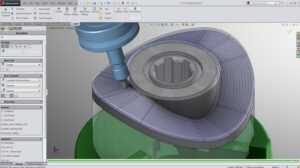
CAM for optimized machining paths
-
Offline robot programming software
Digital twins allow manufacturers to simulate robotic cells before physical deployment, reducing trial-and-error costs.
For engineering outsourcing companies like TAS Vietnam, which specialize in mold design, stamping die design, CAD/CAE simulation, and manufacturing support, robotics integration complements advanced engineering capabilities. It creates a seamless flow from design validation to automated production.
This synergy positions engineering partners not just as service providers but as technology enablers.
9. Industry Applications in Vietnam
9.1 Automotive and Motorcycle
-
Robotic welding
-
Automated stamping handling
-
Precision assembly
-
Inspection automation
9.2 Electronics Manufacturing
-
High-speed pick-and-place
-
Micro-assembly
-
Vision-based inspection
9.3 Injection Mold and Tooling
-
Automated part extraction
-
Robotic trimming
-
Polishing assistance
-
Mold maintenance support
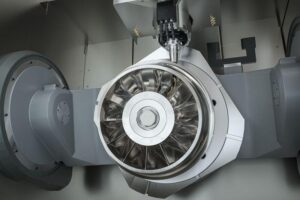
9.4 CNC Machining
-
Robot loading/unloading
-
Lights-out manufacturing
-
Multi-machine tending
These applications increase productivity while stabilizing output quality.
10. Barriers to Adoption and Strategic Solutions
10.1 Capital Investment Concern
Solution: Phased implementation, ROI modeling, and pilot projects.
10.2 Lack of Technical Expertise
Solution: Collaboration with engineering partners experienced in CAD/CAE simulation and robotic integration.
10.3 Cultural Resistance
Solution: Leadership-driven digital transformation strategy and workforce upskilling programs.
Strategic implementation must align robotics with long-term business goals rather than treating it as short-term cost reduction.
11. From Cost-Based Competition to Technology-Based Advantage
Vietnamese enterprises face a pivotal choice:
-
Continue competing on wage cost
-
Or compete on engineering excellence and automation capability
Industrial robots serve as a catalyst for structural transformation:
-
Higher productivity
-
Greater quality consistency
-
Enhanced global competitiveness
-
Improved brand perception
-
Sustainable long-term profitability
Escaping the low-cost labor trap requires more than incremental efficiency improvements. It demands technological upgrading and strategic repositioning.
Conclusion
Industrial robots are not merely automation tools—they are strategic infrastructure for modern manufacturing. For Vietnamese companies aiming to transition from labor-driven production to engineering-driven excellence, robotics is a critical enabler.
The shift from low-cost labor dependency to high-value manufacturing is not optional; it is inevitable. Enterprises that proactively integrate robotics, simulation-based engineering, and digital manufacturing ecosystems will secure stronger positions in global supply chains.
Vietnam’s next stage of industrial growth will be defined not by cheap labor, but by smart factories, advanced engineering capabilities, and intelligent automation systems. Industrial robots are the key that unlocks this transformation.