Introduction: Technical Barriers – The Silent Bottleneck of Vietnam’s Supporting Industry
Vietnam’s automotive and motorcycle supporting industries are standing at a critical crossroads. While market demand continues to grow and global OEMs expand production footprints in Southeast Asia, local suppliers face persistent technical barriers that limit their ability to scale, compete, and integrate deeply into global supply chains.
These barriers are rarely about ambition or effort. Instead, they stem from engineering capability gaps—in product design, tooling development, simulation, manufacturability, and production readiness. For Tier 2 and Tier 3 suppliers in particular, the lack of advanced technical support often results in long lead times, unstable quality, frequent design changes, and costly production errors.
This is where TAS Vietnam positions itself differently—not merely as a service provider, but as a technical enabler, helping automotive and motorcycle supporting enterprises break through engineering limitations and move toward sustainable, high-value manufacturing.
Understanding the Technical Challenges in Vietnam’s Automotive and Motorcycle Ecosystem
1. Increasing Complexity of Automotive and Motorcycle Components
Modern vehicles demand increasingly complex components:
-
Lightweight structures
-
Tight dimensional tolerances
-
High durability under harsh operating conditions
-
Compliance with international standards (IATF 16949, ISO, OEM-specific requirements)
However, many local supporting companies still rely on experience-based design approaches or legacy tooling practices. Without advanced CAD/CAE integration and simulation-driven engineering, these methods struggle to meet today’s expectations.
2. Tooling and Manufacturability Gaps
Injection molds, stamping dies, and assembly jigs play a decisive role in product quality and production efficiency. Common challenges include:
-
Poor mold flow leading to defects
-
Excessive tooling modification cycles
-
Inadequate cooling or material behavior prediction
-
Late-stage design changes affecting production schedules
These issues often originate from insufficient upfront engineering analysis rather than production mistakes.
3. Limited Access to Advanced Engineering Resources
Hiring and retaining highly skilled CAD/CAE engineers is costly and competitive. Many SMEs cannot justify maintaining large in-house engineering teams, yet outsourcing overseas introduces communication delays, cultural gaps, and misalignment with local production realities.
TAS Vietnam’s Role: Engineering Support that Breaks Technical Barriers
TAS Vietnam was founded to address precisely these pain points. As an engineering outsourcing and technical support partner, TAS Vietnam provides specialized expertise that allows automotive and motorcycle suppliers to overcome engineering limitations without inflating fixed costs.
Rather than offering fragmented services, TAS Vietnam delivers end-to-end technical support, from concept validation to production optimization.
Core Technical Support Services for Automotive and Motorcycle Industries
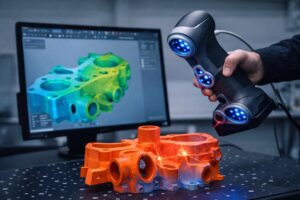
1. Advanced CAD Design for Automotive and Motorcycle Components
TAS Vietnam supports customers with high-precision CAD design tailored to automotive applications:
-
Plastic parts for interior, exterior, and functional systems
-
Metal components for chassis, brackets, and structural elements
-
Design aligned with OEM standards and supplier specifications
Every design decision is guided by manufacturability, tooling feasibility, and lifecycle performance—ensuring that parts are not only functional but also production-ready.
2. CAE Simulation: Predicting Performance Before Production
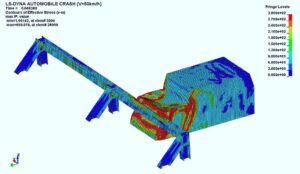
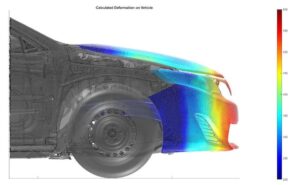
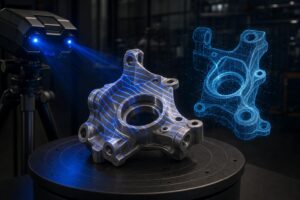
One of the most effective ways to eliminate technical risk is simulation-driven engineering. TAS Vietnam provides comprehensive CAE services, including:
-
Mold flow analysis for injection molding
-
Structural and durability analysis
-
Warpage, shrinkage, and cooling optimization
-
Process feasibility validation
By identifying potential defects before tooling is built, customers significantly reduce rework costs, shorten development cycles, and stabilize quality from the first production run.
3. Tooling Engineering: Injection Molds, Stamping Dies, and Jigs
Tooling quality directly defines production efficiency. TAS Vietnam supports:
-
Injection mold design and optimization
-
Stamping die engineering
-
Fixture and jig design for assembly and inspection
Each tooling solution is engineered to:
-
Improve cycle time
-
Reduce maintenance frequency
-
Extend tool life
-
Ensure consistent dimensional accuracy
This approach allows manufacturers to move from reactive problem-solving to proactive tooling control.
4. Manufacturing Support and Production Readiness
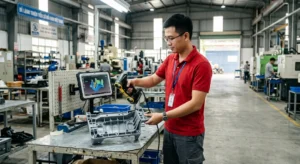
Beyond design and simulation, TAS Vietnam assists customers during the critical transition from development to mass production:
-
DFM/DFA (Design for Manufacturing / Assembly) reviews
-
Technical support during trial runs
-
Root cause analysis for production issues
-
Engineering change management
This hands-on support ensures that engineering intent is preserved throughout the production process.
Why Engineering Outsourcing is a Strategic Advantage – Not a Cost Shortcut
For many automotive supporting companies, outsourcing engineering is still seen as a short-term cost-saving tactic. TAS Vietnam challenges this mindset.
Engineering outsourcing, when executed correctly, becomes a strategic capability multiplier:
-
Access to experienced engineers without long-term overhead
-
Faster adoption of advanced tools and methodologies
-
Scalability aligned with project demand
-
Improved responsiveness to OEM requirements
By partnering with TAS Vietnam, customers gain a flexible, high-level engineering extension of their internal teams.
Local Insight, Global Engineering Standards
One of TAS Vietnam’s key differentiators is its ability to bridge local manufacturing realities with global engineering standards.
The team understands:
-
Vietnamese production environments
-
Local supplier capabilities and constraints
-
Communication styles and operational workflows
At the same time, TAS Vietnam applies engineering methodologies aligned with international automotive practices—ensuring compatibility with global OEM expectations.
This dual perspective minimizes misalignment and accelerates decision-making.
Enabling Vietnam’s Supporting Industry to Move Up the Value Chain
Vietnam’s long-term competitiveness in automotive and motorcycle manufacturing depends on more than cost advantages. It requires:
-
Higher engineering content
-
Stronger technical autonomy
-
Reduced dependence on foreign tooling and design sources
TAS Vietnam contributes directly to this transformation by empowering local suppliers with the technical foundation needed to move up the value chain—from simple manufacturing to engineering-driven production.
Conclusion: TAS Vietnam as a Long-Term Technical Partner
Breaking technical barriers is not a one-time effort. It requires continuous improvement, deep engineering expertise, and a partner who understands both the technical and business realities of the automotive supporting industry.
TAS Vietnam stands at this intersection—providing professional, specialized, and scalable technical support services that enable automotive and motorcycle suppliers in Vietnam to:
-
Reduce technical risk
-
Improve product quality
-
Shorten development cycles
-
Compete confidently in global supply chains
In a rapidly evolving industry, engineering excellence is no longer optional. With TAS Vietnam, it becomes achievable.